The Complete Guide to Online Reviews in 2026: Getting Them, Responding to Them, Surviving Fake Ones

Online reviews have become the first stop for almost every customer decision, not just for restaurants and retail, but for contractors, medical practices, law firms, and just about every kind of local business. A recent industry survey of U.S. consumers found that 97 percent read reviews before choosing a local business, and the share who say they “always” check reviews before browsing jumped sharply in the past year alone. Star ratings and recent feedback now carry real weight in whether someone picks up the phone or scrolls past.
This guide walks through the full picture: how to generate more genuine reviews without running afoul of federal rules, how to respond to both praise and criticism in a way that builds trust, and how to recognize and handle fake or malicious reviews when they show up on Google, Facebook, or Yelp. We wrote about our own experience surviving a coordinated fake review attack last year, and this guide broadens that lesson into a full playbook.
Why Reviews Carry More Weight in 2026
A few data points explain why review management has moved from a nice-to-have to a core part of digital marketing:
- Roughly 4 in 10 consumers now say they always check reviews before choosing a business, up substantially from the year before.
- A meaningful share of shoppers now filter out any business rated below 4.5 stars, a stricter bar than in past years.
- Most consumers want to see reviews from the last few months, and a growing group only trusts feedback from the last few weeks.
- Positive reviews make a shopper more likely to use a business; negative ones do the opposite for a similar share of readers.
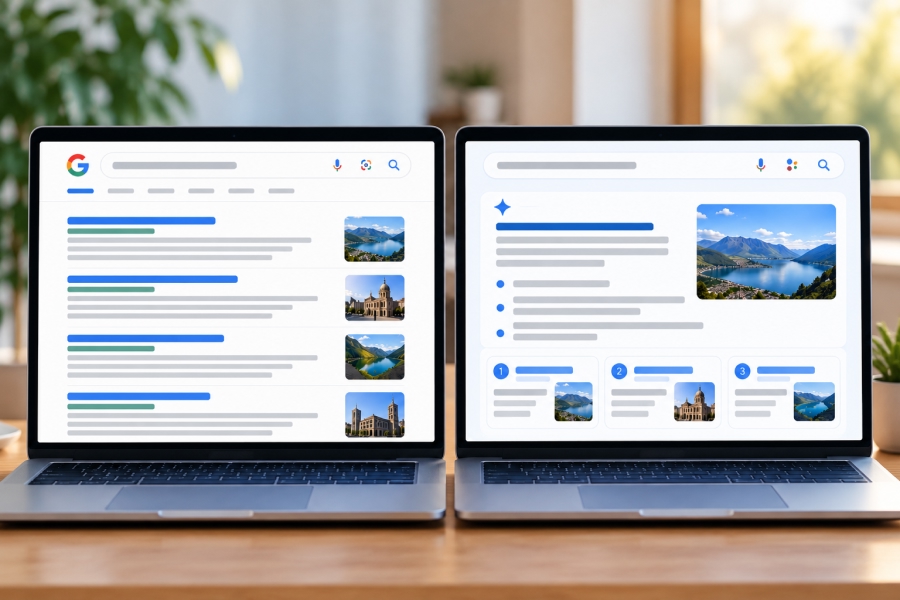
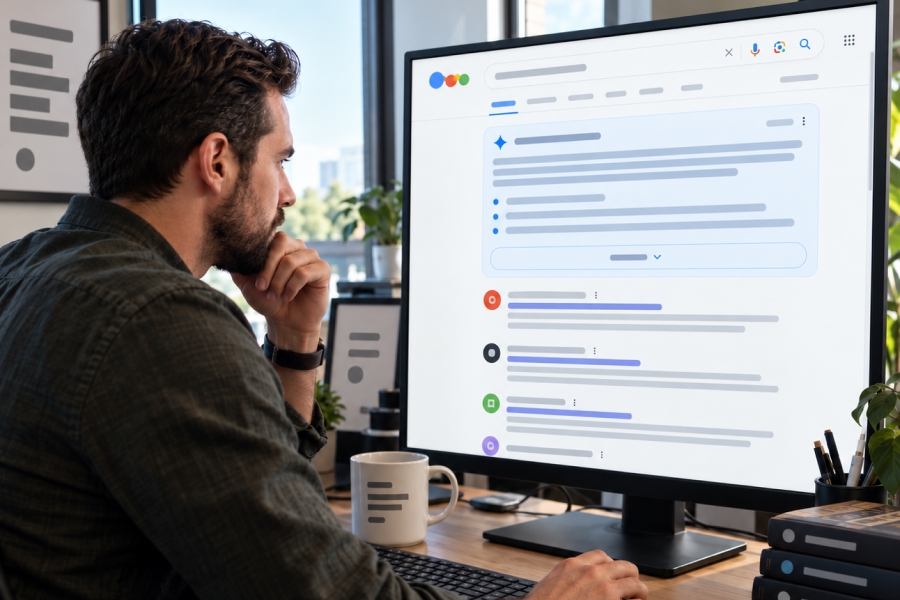
- AI tools like ChatGPT and Google’s AI Mode are now a meaningful discovery channel for local businesses, and they summarize review sentiment when making recommendations, so review text quality matters even to readers who never visit a review page directly.
The takeaway for a small business owner: review volume, recency, and how you respond are now working together as a single trust signal, not three separate chores.

Getting More Reviews the Right Way
Businesses that consistently earn new reviews tend to build the habit into their existing customer touchpoints rather than treating review requests as a separate campaign.
- Ask at the natural high point: right after a job is finished, an appointment ends, or an order ships, while the experience is still fresh.
- Make it a one-click path. A direct Google review link or a QR code on an invoice or receipt removes the friction of searching for your business first.
- Follow up by text or email within a day or two of service, with a short, personal note rather than a generic mass blast.
- Train front-line staff to mention reviews naturally in conversation, without pressuring a customer or offering anything in exchange.
- Spread requests across platforms relevant to your industry (Google is the default, but Facebook, Yelp, and industry-specific sites like Houzz or Healthgrades matter depending on your business).
What Not to Do: The FTC’s Consumer Review Rule
The FTC’s Consumer Review Rule, which took effect in late 2024, prohibits buying, selling, or otherwise manufacturing fake reviews, and it also bans offering incentives conditioned on a positive rating. Enforcement has picked up: the FTC sent warning letters to companies in late 2025 over fake or incentivized reviews, and civil penalties can reach over $53,000 per violation. A few practical guardrails:
- Never offer a discount, gift card, or other reward only for a positive review; a neutral incentive offered regardless of sentiment (or none at all) is the safer path.
- Don’t ask employees, owners, or family members to post reviews without clearly disclosing the connection.
- Don’t selectively hide or bury negative reviews on your own site while only showcasing the positive ones.
- Never purchase reviews or use a service that generates them for you, even from a “reputation management” vendor.
Responding to Reviews the Right Way
Consumers increasingly expect a reply, and a growing share of readers can tell (and are put off by) a copy-paste response. A little personalization goes a long way.
Responding to Positive Reviews
- Thank the customer by name and reference something specific from their review rather than a generic “thanks for the kind words.”
- Keep it short. Two or three sentences is plenty; the goal is to show future readers that you’re engaged, not to write another blog post.
- Where it fits naturally, mention a related service. This is informational, not a sales pitch: something like “glad the new patient portal made scheduling easier” tells other readers what you offer.

Responding to Negative (but Real) Reviews
- Acknowledge the specific issue rather than a blanket apology. Vague responses read as scripted.
- Move the conversation offline. Offer a phone number or email to resolve details, rather than debating specifics publicly.
- Avoid defensive or dismissive language, even when you believe the review is unfair. Future customers read your response as much as the review itself.
- Never promise a specific outcome in a public response (“we’ll make sure this never happens again”) since that can create expectations you can’t control. A more accurate version: “we’re reviewing our process to help prevent this going forward.”
A genuinely negative review from a real customer generally can’t be removed, and platforms are not designed to referee factual disputes between a business and a reviewer. A calm, specific, professional response is almost always more persuasive to future readers than trying to get a legitimate complaint taken down.
Spotting and Handling Fake Reviews
Fake reviews generally fall into a few recognizable patterns: reviews from accounts with no history and no other activity, reviews that mention a competitor’s name or an unrelated product, a sudden cluster of one-star ratings posted within hours of each other, or reviews that reference details that don’t match anything your business actually does. None of that guarantees a review is fake, but it’s worth documenting with a screenshot before you report it.
Reporting a Fake Review on Google
Google’s review reporting process works through your Business Profile:
- Open your Business Profile, find the review, and select “Report review.”
- Choose the most specific policy violation available (spam or fake content, conflict of interest, off-topic, or harassment) rather than a generic category.
- Evaluation typically takes several days; you can check status in the Reviews Management Tool. If the decision comes back as “no policy violation,” you get one appeal, so make it count with clear supporting detail.
- Google has also added automatic detection for sudden spikes in suspicious reviews, which can pause new reviews on a profile and notify the business while it investigates, a useful backstop during a coordinated attack.
Reporting a Fake Review on Facebook
- Click the three dots in the corner of the review and select the option to report it.
- Choose the reason that best matches the issue (fake account, doesn’t relate to your business, harassment, and so on).
- Facebook reviews can’t be removed by the business directly, so reporting through the platform is the only route, alongside responding publicly while you wait.
Reporting a Fake Review on Yelp
- Use the flag icon on the review and select a reason from Yelp’s dropdown menu.
- Yelp’s moderation team assesses the review against its content guidelines rather than removing it automatically; expect anywhere from a day to about two weeks depending on the case.
- Yelp is generally clear that a genuinely negative experience, even one you disagree with, is not grounds for removal; the flag process is meant for guideline violations, not disputes over opinion.
When It’s More Than One Bad Review
Occasionally a business faces something bigger than a single fake review: a coordinated wave of one-star ratings posted in a short window, often from accounts with no connection to the business. We went through exactly this last year, and wrote about the steps we took in our post,
How We Handled a Coordinated Fake Review Attack (And How You Can Too). In broad terms, businesses facing something similar generally find it helpful to:
- Document everything immediately: screenshots, timestamps, and reviewer profile details, before reporting anything.
- Report each review individually through the platform’s flagging tool rather than assuming volume alone will trigger removal.
- Respond calmly and briefly to the reviews publicly while the reports are pending, so other visitors see a measured business rather than silence.
- Consider reporting to the FTC’s ReportFraud.ftc.gov if a reviewer is demanding payment for removal, since that crosses into extortion, and a police report may be worth considering in serious cases.
Every situation is different, and the right response depends on the specifics of what happened. A qualified attorney or a reputation management professional can advise on anything that moves beyond routine platform reporting.

Building a Review Strategy That Holds Up
Reviews aren’t a set-it-and-forget-it task anymore. The businesses that come out ahead tend to treat review generation, response, and monitoring as an ongoing part of their marketing, the same way they’d treat their website or their local search visibility, because increasingly, all three are connected.
If you’d like a second set of eyes on your current review profile, response habits, or a specific situation you’re dealing with right now, reach out for a free reputation management consultation through our digital marketing services team.
This article is for informational purposes only and does not constitute legal advice. Results from review management, digital marketing, and reputation strategies vary based on market conditions, industry, competition, and implementation. Contact a qualified attorney for guidance on legal matters such as defamation or extortion, and a qualified digital marketing professional for guidance specific to your business situation.
Donald B. Moore
Donald B. Moore is the founder of Moore Tech Solutions, Inc., where he has spent over two decades helping businesses grow online. With deep expertise in web solutions, Don combines technical precision with a marketer’s eye for results. He has helped clients nationwide, delivering results that are strategically optimized for visibility and conversion. Through his posts, Don shares practical insights drawn from years of hands-on problem-solving, empowering readers to make informed, impactful decisions about their online presence.