How to Get Your Business Found in Google AI Overviews
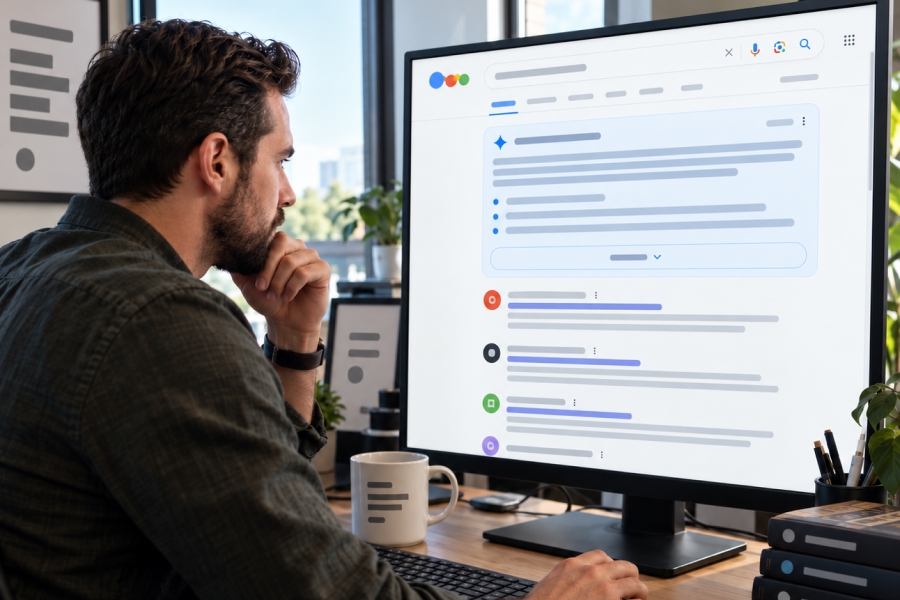
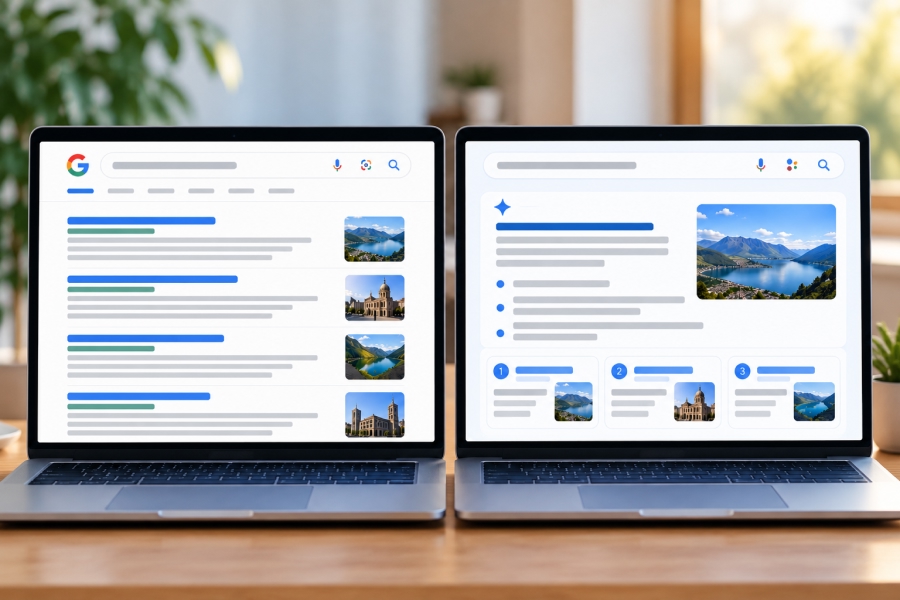
Google AI Overviews can place an AI-generated summary above or among traditional search results, supported by links that help users explore the topic further. For businesses, those supporting links create another way to be discovered when prospective customers ask detailed questions.
There is no separate submission form, special AI schema, or reliable shortcut for earning that visibility. Google says the same SEO foundations used for traditional Search continue to apply. A business can improve its chances by making important pages accessible, useful, specific, and easy for Google to understand.
This guide explains what Google has disclosed about AI Overviews and the practical areas a business can evaluate on its own website.
What Google AI Overviews Are
Google describes AI Overviews as summaries designed to help people understand complicated topics or questions and then explore relevant supporting links. They do not appear for every search. Google displays them when its systems determine that an AI-generated response adds value beyond the standard results.
An AI Overview may answer several parts of a question at once. Someone researching a roof replacement, for example, might ask about price, material options, expected lifespan, financing, and reputable local contractors in a single search. The supporting sources may come from different websites because each source helps answer a different part of the request.
That makes visibility less predictable than a single traditional ranking. The pages and links shown can vary with the wording of the search, the user’s location, available sources, and changes to Google’s systems.

How Google Finds Supporting Sources
Google says AI Overviews and AI Mode may use a process called query fan-out. The system can issue several related searches across subtopics and data sources, then use the results to build a response and identify supporting pages. Google’s explanation of AI features in Search also notes that AI Overviews and AI Mode may use different models and techniques, so they may show different responses and links.
Google does not publish a checklist that guarantees selection as a source. It does publish clear eligibility requirements and recommended practices. A page generally needs to be indexed and eligible to appear in Google Search with a snippet before it can appear as a supporting link in an AI Overview.
Eligibility is only the starting point. Google still evaluates whether a page is relevant and useful for the particular question. Meeting the technical requirements does not guarantee that Google will crawl, index, rank, or use the page.
Eight Areas That Can Improve Your Visibility
1 Make Sure Google Can Crawl and Index the Page
A page cannot support an AI Overview if Google cannot access or index it. Technical problems sometimes exclude strong content before quality or relevance can be considered.
Review the basics, including:
- txt rules and firewall or CDN settings that may block Googlebot
- Noindex directives on pages intended for search visibility
- Canonical tags that point to the correct version of the page
- Internal links that allow Google and visitors to reach important content
- XML sitemaps that include current, indexable URLs
- Important information that is available as readable text rather than only inside images, videos, or interactive elements
Google recommends using Search Console to identify and diagnose technical issues. The URL Inspection tool can help determine whether a specific page is indexed and whether Google encountered a problem while crawling it.
2 Answer the Question Clearly and Completely
AI-assisted searches are often longer and more specific than conventional keyword searches. A prospective customer may describe a situation, add constraints, and ask for a comparison in the same query.
Useful content should make the main answer easy to find, then provide the context needed to understand it. Clear headings, direct explanations, examples, and well-organized supporting details help readers and search systems identify the parts of a page that address a question.
This does not require turning every sentence into an FAQ. It means organizing information around the decisions customers are actually trying to make.
3 Cover the Relevant Subtopics
Because Google may run several related searches to build an AI response, a page or connected group of pages should cover the important parts of the subject. A contractor’s page about roof replacement might explain material choices, typical cost factors, project timing, warranties, financing, and signs that replacement may be more appropriate than repair.
The goal is not to add unrelated keywords. It is to answer the natural follow-up questions a customer is likely to ask. When a topic is too broad for one page, use internal links to connect the reader with a more detailed service page, guide, or comparison.
4 Add Information That Comes From Real Experience
Google’s guidance on helpful, people-first content encourages site owners to demonstrate firsthand expertise and give readers enough information to understand who created the content and why it can be trusted.
Depending on the topic, useful original information may include:
- Examples drawn from actual customer questions or projects
- Photos, diagrams, or videos created by the business
- A clear explanation of the company’s process
- Local conditions that affect price, timing, availability, or service
- Case studies with appropriate context and limitations
- Named authors or reviewers whose qualifications are relevant to the subject
Generic summaries are easy to reproduce. Specific knowledge gives a page more practical value and gives Google clearer evidence of what the business understands.

5 Make the Business and Its Services Easy to Understand
A website should state plainly who the company serves, what it provides, and where it operates. Broad claims such as “quality service you can trust” do not tell Google or a prospective customer whether the company repairs commercial HVAC systems, installs residential heat pumps, or serves a particular county.
Important facts may include:
- Business name and primary category
- Specific services and specialties
- Physical location or service area
- Licenses, certifications, or professional qualifications when relevant
- Years of operation when accurate and useful
- Contact information and a clear path to request service
These details should be consistent across the website and credible third-party profiles. Consistency helps reduce uncertainty about which business, location, or service a page represents.
6 Use Structured Data Accurately
Structured data helps Google understand and classify page content. Depending on the page, appropriate markup may describe an organization, local business, service, product, article, person, event, or another recognized entity.
Structured data should match information that visitors can see on the page. It can improve machine-readable clarity and support eligible search features, but Google specifically states that no special schema.org markup is required for AI Overviews or AI Mode.
Treat schema as a way to describe the content accurately, not as a hidden signal that forces an AI citation.
7 Improve Page Experience and Supporting Media
Google’s recommendations for performing well in AI search experiences include a good page experience and high-quality images or videos when they help the reader. Mobile usability, readable layouts, reasonable loading times, and unobstructed content still matter because people may visit the page after seeing it in an AI Overview.
Visuals should add information rather than decoration. Original project photos, product comparisons, short demonstrations, and explanatory diagrams can make complex subjects easier to understand. Important conclusions should also appear in text so they remain accessible to search systems and visitors using assistive technology.
8 Keep Local Business Information Current
For local businesses, Google recommends keeping Business Profile information accurate and current. Its Business Profile representation guidelines emphasize accurate names, addresses, service areas, categories, hours, and other details.
A complete profile does not guarantee inclusion in an AI Overview. It does give Google a current source for basic business facts and supports visibility across local search experiences. The website and Business Profile should describe the same company without conflicting locations, phone numbers, service categories, or hours.
What Does Not Improve AI Overview Visibility
Several common shortcuts are unsupported or counterproductive:
- Adding an “AI SEO” file or special markup that Google does not request
- Repeating the same keyword unnaturally throughout a page
- Publishing large numbers of shallow articles that repeat information found everywhere else
- Adding schema that describes information not visible on the page
- Hiding the main answer behind scripts, forms, or other interfaces Google may not process reliably
- Treating one AI Overview result as a permanent ranking
Google’s published guidance remains centered on technical accessibility, relevant information, people-first content, and a useful experience. Any tactic should be evaluated against those fundamentals.
How to Measure Visibility in Google AI Overviews
Google introduced Search Generative AI performance reporting in Search Console in 2026. The reporting gives verified site owners more visibility into how their content performs in generative AI features, including AI Overviews and AI Mode.
Use that reporting with the rest of Search Console and analytics data. AI visibility is more useful when it can be connected to meaningful behavior, such as qualified visits, contact requests, phone calls, purchases, or other business goals.
A practical review can include:
- Pages appearing in generative AI results
- Queries or topics associated with those appearances
- Changes in impressions, clicks, and traffic over time
- Landing-page engagement and conversions
- Competitors and third-party sources that appear for important customer questions
- Incorrect or incomplete business information that needs attention
Results should be reviewed over time rather than judged from a single search. AI-generated responses can change as the query, location, sources, and systems change.
Can a Business Guarantee an AI Overview Citation
No. Google does not guarantee crawling, indexing, ranking, or selection as a supporting source. A reputable SEO provider can identify technical barriers, improve content quality, clarify business information, and measure results, but it cannot purchase or promise an AI Overview citation.
The practical goal is to improve the conditions that make a page eligible and useful. That work can also strengthen traditional search visibility because Google applies the same underlying SEO foundations across its search experiences.
Preparing Your Website for AI Powered Search
Start by checking whether Google can access and index the pages that matter most. Then review whether those pages answer real customer questions, show relevant experience, explain the business clearly, and connect visitors with useful supporting information.
At Moore Tech Solutions, our search engine optimization services focus on the fundamentals that support visibility across traditional Google results and developing AI search experiences. The appropriate strategy depends on the website, market, competition, and business goals.
If you would like help evaluating how Google currently understands your website, contact Moore Tech Solutions to discuss a search visibility assessment.
This article is for informational purposes only. Results from web design, SEO, and digital marketing services vary based on market conditions, industry, competition, and implementation. Contact a qualified digital marketing professional for guidance specific to your business situation.
Donald B. Moore
Donald B. Moore is the founder of Moore Tech Solutions, Inc., where he has spent over two decades helping businesses grow online. With deep expertise in web solutions, Don combines technical precision with a marketer’s eye for results. He has helped clients nationwide, delivering results that are strategically optimized for visibility and conversion. Through his posts, Don shares practical insights drawn from years of hands-on problem-solving, empowering readers to make informed, impactful decisions about their online presence.