How to Get Your Business Recommended by ChatGPT

A potential customer can now ask ChatGPT to find a local contractor, compare dental practices, identify a financial advisor, or recommend companies that meet a very specific list of needs.
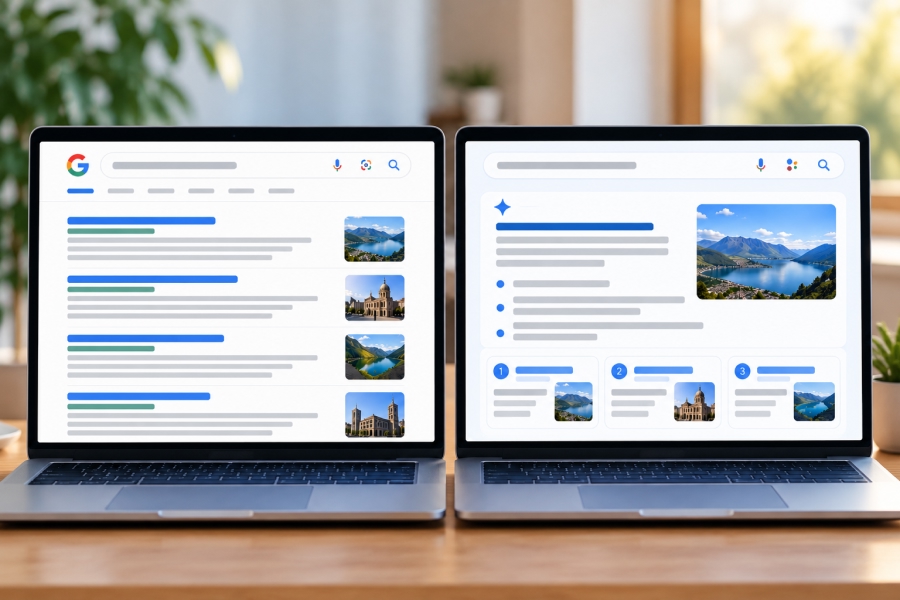
Instead of scrolling through a conventional page of search results, they may receive a short list of businesses, helpful context, and links to sources they can explore. That is a meaningful change in how people research—and a good reason for businesses to make sure their online information is doing its job.
The important reality check: no business can flip a switch and make ChatGPT recommend it. OpenAI says ChatGPT search uses multiple factors to find relevant, reliable information, and it does not guarantee placement.
Still, you are not powerless. You can make it easier for ChatGPT—and, more importantly, prospective customers—to find, understand, verify, and match your business to the right request.
The goal is simple: make your company easy to discover, clear about what it does, well supported across the web, and genuinely useful to the people looking for it.
What a ChatGPT Recommendation Means
ChatGPT can search the web for current information and provide links to relevant sources. When someone asks for a business recommendation, the response may mention one or more companies, summarize what it found, cite websites, or show local results.
Exactly what appears can vary. It depends on the question, the person’s location, the information available online, and how the product handles the request at that moment.
A mention and a citation are related, but they are not the same thing.
ChatGPT may cite your website because it contains useful information without specifically recommending your company. On the other hand, it may mention your business after finding supporting details across your website, listings, reviews, directories, and other sources.
So, adding “We are the best company in town!” to your homepage is not a shortcut. It is more likely to make readers roll their eyes than make an AI system more confident in recommending you.
Recommendations are not fixed rankings, either. ChatGPT may rewrite a request into more targeted searches, and the sources it uses can change based on wording, requirements, location, and timing. A company that appears for one question may not appear for a closely related one—and that does not necessarily mean anything has gone wrong.

How ChatGPT Finds Business Information
OpenAI explains that ChatGPT may search automatically when a question would benefit from current information. It may use search partners, run additional searches, and use approximate or shared device location to improve local results.
In practical terms, ChatGPT may learn about your company through many places, including:
- Your website
- Business listings and maps
- Industry directories
- Review platforms
- News coverage
- Professional associations
- Community organizations
- Other credible sources relevant to the question
Your website is important, but it is not the only place that matters. Think of your web presence as a collection of clues. The more consistent, detailed, and trustworthy those clues are, the easier it is for customers—and search systems—to understand who you are and whether you fit a particular need.
OpenAI does not publish a formula for ranking businesses. Its current guidance says search results are ranked using multiple factors intended to surface relevant and reliable information.
That means there is no secret AI SEO recipe, magic plugin, or “recommended by ChatGPT” button hiding somewhere in your WordPress dashboard. The work is more practical: provide accurate information, make it accessible to ai bots, and support it with evidence people can trust.

Eight Ways to Improve Your Chances
1. Let ChatGPT Search Access Your Website
Before worrying about content, make sure ChatGPT search can actually reach your site.
If OpenAI’s search crawler is blocked by your robots.txt file, firewall, bot-protection service, or content delivery network, your content may not be fully considered for ChatGPT search. It is difficult to be recommended if the system cannot see the information that explains why you are a good match.
OpenAI identifies OAI-SearchBot as the crawler used to surface websites in ChatGPT search. Sites that opt out of OAI-SearchBot will not be shown in ChatGPT search answers, although a navigational link may still appear in limited circumstances. OpenAI also recommends allowing requests from its published search-bot IP addresses.
One detail that causes understandable confusion: OAI-SearchBot is not the same as GPTBot.
- OAI-SearchBot supports discovery in ChatGPT search.
- GPTBot relates to potential model training.
A site owner can allow search discovery while disallowing training. Review the rules carefully rather than assuming every OpenAI crawler serves the same purpose.
2. Say Exactly What Your Business Does
Vague website copy may sound polished, but it does not help much when a customer is trying to determine whether you can solve a specific problem.
Phrases such as “quality solutions for every need” can apply to almost any business—and tell a prospective customer almost nothing. A heating and air company, for example, should clearly state whether it repairs residential HVAC systems, installs heat pumps, offers emergency service, provides financing, and serves particular cities or counties.
Good business pages answer basic questions quickly:
- What services do you provide?
- Who do you serve?
- Where do you work?
- What types of situations do you specialize in?
- What qualifications, experience, or differences matter?
Specific information helps customers make decisions. It also gives ChatGPT clearer evidence to use when someone asks for a business that meets a particular need.
3. Build Pages Around Real Decision Criteria
People rarely ask ChatGPT only for “a plumber near me” or “a dentist in my city.” They often add the details that actually affect the decision.
They may ask for a company that serves a certain area, works with a specific property type, offers financing, accepts a particular insurance plan, has experience with a specialized problem, or is available on short notice.
Your website should address the criteria that determine whether your business belongs in the answer:
- Which services you provide—and which you do not
- Where you work or accept customers
- Which problems, property types, or customer situations you specialize in
- Relevant licenses, certifications, credentials, or experience
- What customers can expect regarding timing, process, and pricing factors
- Any limitations, eligibility requirements, or service boundaries
This information can live on service pages, location pages, staff profiles, comparison guides, FAQs, or detailed articles. The format matters less than the clarity. If a customer has to work too hard to find the answer, there is a good chance a search system will have trouble, too.

4. Publish Information Worth Citing
OpenAI introduced ChatGPT search as a way to answer questions with links to original sources and high-quality content from the web.
That is a useful clue. A page is more likely to earn a citation when it contributes something helpful, specific, and original—not when it repeats the same generic advice found on dozens of other websites.
You can create stronger, more useful content through:
- Clear explanations based on your company’s real work and experience
- Original photos, examples, case studies, or process details
- Local insight that helps people in your actual service area
- Named authors or reviewers with relevant expertise
- Honest comparisons that explain tradeoffs and limitations
- Current information supported by dependable sources
The goal is not to write a 3,000-word article just because someone said long-form content is good for SEO. The goal is to give readers information that helps them make a better decision—AND gives a search system a credible reason to cite your page.
5. Keep Your Business Facts Consistent Everywhere
ChatGPT may find your business information in more than one place. If those sources disagree about your NAP (name, address, phone number), service area, hours, categories, or services, it creates unnecessary uncertainty.
Take time to review your:
- Website
- Major business profiles
- Maps and directory listings
- Industry-specific directories
- Professional associations
- Social profiles
- Review platforms
- Other prominent references to your business
Correct outdated information and remove claims that no longer reflect the company. Consistency does not guarantee a recommendation, but it helps reduce the kind of avoidable confusion that can make a business harder to understand and trust.
- Earn Credible Third-Party Evidence
Your website can make claims about your business. Independent sources can help support them.
Relevant reviews, association memberships, professional profiles, local media coverage, community partnerships, and legitimate directory listings may help customers—and search systems—verify that your business exists, understand its reputation, and learn about its specialties.
OpenAI has not identified a fixed set of third-party signals that guarantees a business will appear in recommendations. Treat off-site visibility as a credibility and discovery practice, not as a checklist for tricking ChatGPT.
A helpful rule of thumb: pursue sources that real customers would reasonably use even if AI search did not exist.
That usually means avoiding fabricated reviews, low-quality directory schemes, and “guaranteed AI mentions” that sound impressive but do not offer much lasting value.
7. Make Your Local Information Complete
Location can make a major difference in a recommendation. OpenAI says ChatGPT may use approximate IP-based location or optional device location to provide more relevant local results.
If your business serves customers in person, make sure your address, hours, contact information, appointment details, parking information, and accessibility details are easy to find when relevant.
If you are a service-area business, clearly describe the cities, counties, or regions you actually serve.
The key word is actually. It is better to have a useful page about the places you truly serve than dozens of thin location pages where only the city name changes. Readers recognize that approach quickly, and it rarely provides much value.
- Keep Important Pages Current
Old information can quietly undermine an otherwise strong website.
Former employees, discontinued services, expired specials, outdated pricing, incorrect office locations, and old service areas can all create confusion. Review the pages that influence customer decisions on a regular schedule, especially when your business changes its services, territory, staff, credentials, or policies.
Add an updated date when it is useful for the reader. Just do not change the date solely to make an unchanged article look fresh. A fresh date is not a substitute for fresh information.
How to Test Your Visibility in ChatGPT
Testing can be useful, but one ChatGPT answer is not a permanent ranking report.
Results can change based on wording, location, conversation context, timing, the information available online, and whether web search is used. The goal is to look for patterns over time—not to panic because your business appeared in one test on Tuesday and did not appear in a slightly different test on Thursday.
Start with questions a real prospective customer might ask:
- Which companies provide a specific service in my city?
- Who specializes in a particular problem, property type, or customer need?
- What businesses meet two or three meaningful requirements?
- Which local companies should I compare before making a decision?
- What should I look for when choosing a provider, and which businesses fit those criteria?
As you test, record:
- Whether your company appears
- Which competitors appear
- What sources ChatGPT cites
- Whether the information is accurate
- Which details or requirements seem to change the result
Use a small, consistent group of realistic prompts and repeat them over time. Random searches can be interesting, but they rarely provide a reliable picture of visibility.
Website analytics can offer another useful clue. OpenAI’s publisher guidance explains that ChatGPT referral links include utm_source=chatgpt.com, which can help you identify incoming ChatGPT search traffic in your analytics platform.
Common Mistakes to Avoid
Some tactics sound tempting but offer little dependable value:
- Making unsupported “best in town” claims
- Publishing dozens of shallow articles that repeat the same advice
- Creating near-duplicate city pages with no real local information
- Buying fabricated reviews, mentions, or directory placements
- Treating schema markup or an llms.txt file as a guaranteed recommendation switch
- Blocking OAI-SearchBot while expecting full visibility in ChatGPT search
- Judging performance from one prompt tested one time
The most durable approach is also the least flashy: publish accurate information, make it accessible, support it with real evidence, and maintain a presence where customers already go to evaluate businesses.
It may not feel as exciting as a secret hack. That is because it is not a secret hack. It is good marketing, good customer service, and good web publishing.
Can You Guarantee a ChatGPT Recommendation?
No.
ChatGPT’s answers depend on the request, location, available information, product behavior, and systems that continue to evolve. OpenAI explicitly states that placement in ChatGPT search is not guaranteed.
A responsible AI SEO strategy can improve the conditions for discovery. It cannot buy a permanent position, control every answer, or promise immediate inclusion.
Be careful with anyone who guarantees mentions, fixed rankings, or instant visibility in ChatGPT. Those promises may be appealing, but they go beyond what any responsible provider can honestly guarantee.
A Practical Starting Point
If you want a sensible place to begin, use this order:
- Check whether OAI-SearchBot can access your website.
- Review whether your site clearly explains your services, locations, expertise, and customer fit.
- Compare those details with your major third-party profiles and correct inconsistencies.
- Publish or improve content that answers real customer questions with useful detail.
- Test a consistent set of realistic recommendation prompts and document what ChatGPT finds.
These steps can also support broader search engine optimization. Clear pages, useful content, accurate listings, and credible third-party information help customers whether they start with Google, ChatGPT, a directory, a referral, or your website.
Improving Your Business Visibility in ChatGPT
Getting recommended by ChatGPT is not really about writing for a chatbot. It is about making your business easy to discover, understand, verify, and match to the needs of a real person.
That work starts with technical access, but it extends to the quality of your website, content, local listings, reviews, and third-party presence. Done well, it remains useful no matter how a customer finds you.
If you would like to see what ChatGPT can currently find about your company, which competitors appear, and where your digital presence may leave important questions unanswered, contact Moore Tech Solutions about an AI search visibility assessment.
Disclaimer: This article is for general informational purposes only and does not constitute legal, financial, medical, or other professional advice. Search and AI platforms change frequently, and no particular ranking, citation, recommendation, or business result is guaranteed.
Donald B. Moore
Donald B. Moore is the founder of Moore Tech Solutions, Inc., where he has spent over two decades helping businesses grow online. With deep expertise in web solutions, Don combines technical precision with a marketer’s eye for results. He has helped clients nationwide, delivering results that are strategically optimized for visibility and conversion. Through his posts, Don shares practical insights drawn from years of hands-on problem-solving, empowering readers to make informed, impactful decisions about their online presence.