AI SEO: How to Get Your Business Found in Google, ChatGPT & AI Search

The way people search for businesses is changing.
For years, search engine optimization focused primarily on one goal: helping your website appear prominently when someone searched Google for the products or services you provide.
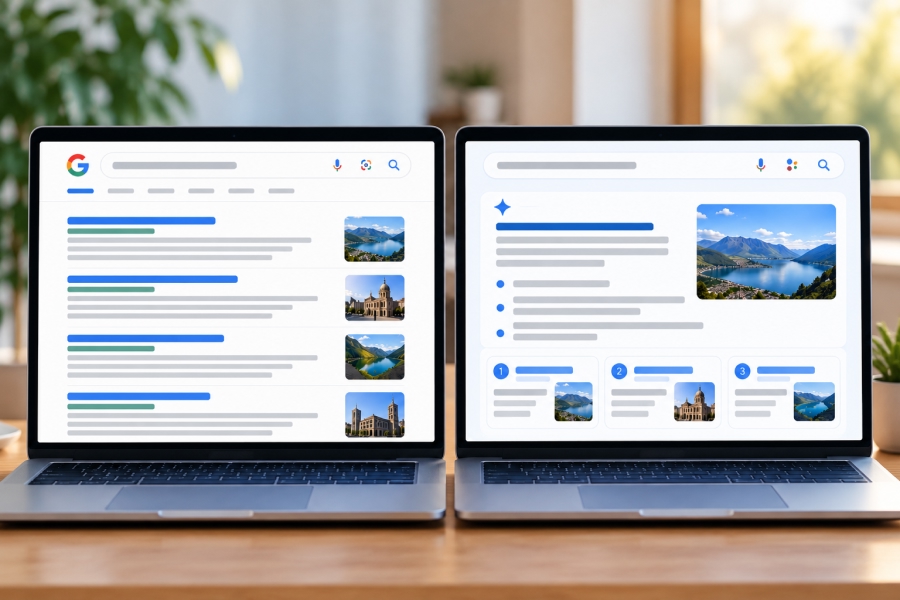
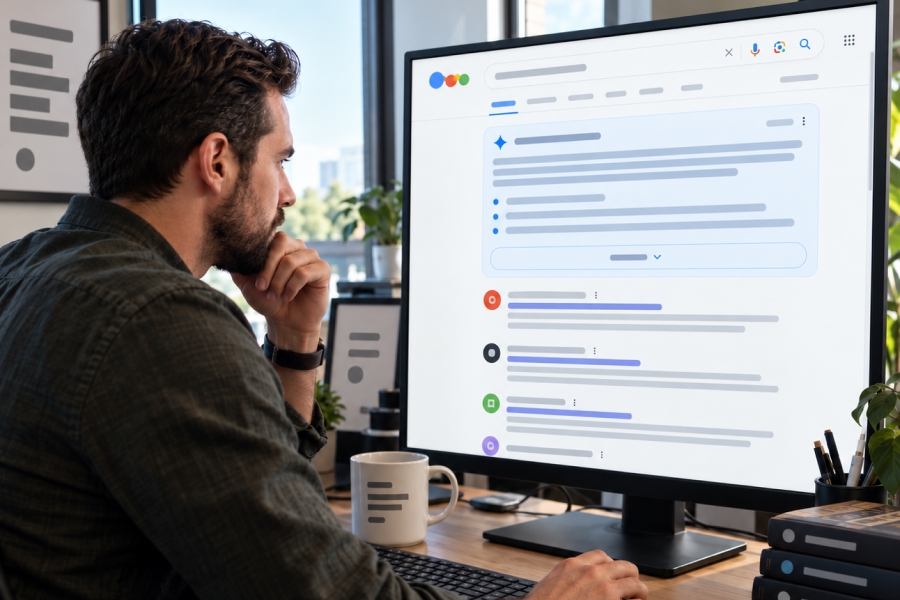
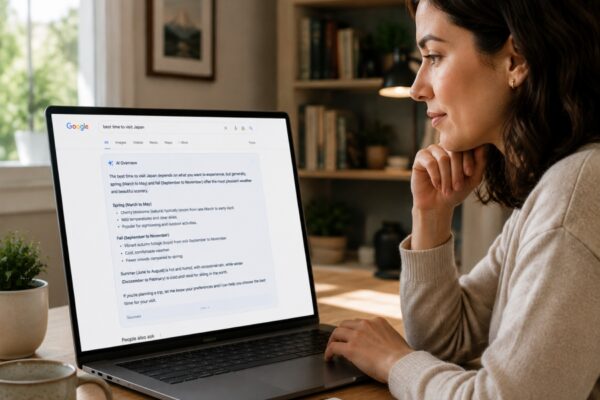
That still matters. But today, your potential customers may also ask ChatGPT for recommendations, get an AI-generated answer at the top of Google, use Google’s AI Mode to research their options, or rely on another AI-powered search experience to decide which businesses deserve a closer look.
That creates a new challenge for businesses:
It is no longer enough for search engines to find your website. Increasingly, you also want AI systems to understand your business well enough to include it in the answers and recommendations they provide.
This evolving discipline is commonly called AI SEO, along with terms such as Generative Engine Optimization (GEO), Answer Engine Optimization (AEO), and Large Language Model Optimization (LLMO).
The terms differ, but the business objective is straightforward:
Make your company easy to find, easy to understand, and a credible source or recommendation when people search with Google, ChatGPT, and other AI-powered tools.
What Is AI SEO?
AI SEO is the process of improving a business’s visibility across both traditional search engines and AI-powered search and answer platforms.
Traditional SEO generally asks:
“How can we get this page to rank higher for a relevant search?”
AI SEO adds another question:
“How can we help AI systems understand, trust, cite, and potentially recommend this business or its content when answering a relevant question?”
Those goals overlap considerably.
In fact, Google explicitly says that its established SEO best practices remain relevant to AI Overviews and AI Mode and that there are no special technical requirements or secret AI-specific markup required to appear in them. A page generally needs to be indexed and eligible to appear in Google Search to be eligible as a supporting link in Google’s AI features.
Microsoft provides similar guidance for Bing and Copilot: traditional crawling, indexing, relevance, and content-quality fundamentals continue to support visibility in AI-generated experiences.
So AI SEO does not replace SEO.
It expands it.
Why AI Search Changes the Customer Journey
Consider someone who needs a new HVAC system.
A traditional Google search might look like:
HVAC companies near me
The customer receives search results, map listings, advertisements, reviews, and company websites and begins comparing businesses.
Now consider an AI-assisted search:
“I need to replace a 20-year-old HVAC system. What are some reputable companies near me that install high-efficiency systems, have good reviews, and offer financing?”
This changes how the customer evaluates options.
The customer isn’t simply asking for a list of web pages. They’re asking a system to research, evaluate, organize, and recommend options.
The same behavior can apply to dentists, financial advisors, roofers, real estate companies, medical practices, accountants, contractors, and countless other businesses.
Your website may therefore be competing for more than a position in a list of search results.
It may be competing to become part of the answer.
Where Does AI Search Happen?
AI-powered discovery now occurs across several environments.
Google AI Overviews and AI Mode
Google can generate AI-powered responses directly within Search. These responses may include links that allow users to explore the sources and businesses relevant to their questions.
Google says AI Overviews are shown when its systems determine that an AI-generated overview adds value beyond traditional search results. AI Mode can also use different models and techniques, meaning the links displayed can vary between Google’s AI experiences.
For businesses, this creates another potential area of visibility within Google itself.
ChatGPT Search
ChatGPT can search the web when current information is useful and provide links and citations to web sources.
OpenAI states that public websites can appear in ChatGPT search. Website owners who want their content to be discoverable should make sure they are not blocking OAI-SearchBot, OpenAI’s crawler used for search discovery. Inclusion or placement, however, is not guaranteed.
This distinction is important.
Making your website technically accessible to an AI search system does not mean the system will recommend your business. It simply makes discovery possible.
Bing and Microsoft Copilot
Bing also uses web content to support AI-generated answers and Microsoft Copilot experiences.
In 2026, Microsoft introduced AI Performance reporting within Bing Webmaster Tools, allowing website owners to see information such as which pages are cited in AI answers and the types of grounding queries associated with those citations.
The existence of these reporting tools illustrates an important shift: businesses are beginning to measure not only rankings and clicks, but also AI citations and AI visibility.

SEO vs. AI SEO: What’s the Difference?
There is significant overlap between the two.
Good traditional SEO helps search engines crawl your website, understand its content, associate pages with relevant searches, and determine whether those pages deserve visibility.
Those fundamentals remain essential.
AI search, however, can place greater emphasis on how clearly information answers a question and whether a system can confidently extract, interpret, corroborate, and use that information when constructing an answer.
A useful way to think about it is:
Traditional SEO:
Can the search engine find, understand, index, and rank this page?
AI SEO:
Can an AI system find and understand this information well enough to use it when answering someone’s question?
Successful modern search optimization increasingly needs to consider both.
Seven Foundations of AI SEO
There is no magic switch that makes a business appear in ChatGPT or Google AI Overviews. No legitimate SEO company can guarantee that an AI system will recommend a particular business.
There are, however, several areas businesses can improve.
1. Make Sure AI and Search Engines Can Access Your Website
Before your content can be selected, it generally needs to be discoverable.
That means reviewing basic technical SEO issues such as:
- Search engine crawling and indexing
- txt directives
- Noindex directives
- XML sitemaps
- Internal linking
- Canonical URLs
- Site architecture
- Server and CDN configurations
- Important information hidden behind scripts or other inaccessible interfaces
For ChatGPT search specifically, websites seeking inclusion should ensure OAI-SearchBot isn’t inadvertently blocked by their robots.txt configuration or hosting infrastructure.
Technical SEO isn’t suddenly obsolete because AI arrived.
It is the foundation AI visibility is built upon.
2. Make It Extremely Clear What Your Business Does
Imagine an AI system encountering two websites.
One says:
“Delivering innovative solutions with exceptional service for more than 25 years.”
The other says:
“ABC Heating & Air provides residential HVAC repair, air-conditioning installation, furnace replacement, and preventative maintenance throughout Birmingham and surrounding communities.”
Which one provides more useful information?
Businesses frequently fill their websites with marketing language while leaving surprisingly basic questions unanswered.
Your website should clearly communicate:
- Who you are
- What you do
- Where you operate
- Who you serve
- The specific services you provide
- Your areas of expertise
- What distinguishes your company
- Your experience and qualifications
- How customers can work with you
Clarity isn’t boring.
For search engines and AI systems, clarity creates understanding.
3. Build Content Around Real Customer Questions
Keyword research remains valuable, but conversational AI has made natural-language questions considerably more important.
People don’t have to reduce their needs to a two- or three-word Google query anymore.
They can ask:
“Should I repair my 12-year-old air conditioner or replace it?”
“What type of dentist should I see for receding gums?”
“What’s the difference between a CPA and a financial advisor?”
“How much should I expect to pay to replace a roof on a 2,500-square-foot house?”
Each question gives a knowledgeable business an opportunity to provide a useful answer.
A strong AI SEO content strategy identifies the questions customers ask throughout their decision-making process and creates genuinely useful resources that answer them.
That doesn’t mean publishing hundreds of shallow FAQ pages.
It means developing authoritative content around the topics where your company has real expertise.
4. Create Content Worth Citing
If everyone publishes essentially the same article, there is little reason for an AI system or a human to prefer yours.
Google specifically encourages website owners to create unique, valuable, non-commodity content for its AI search experiences.
Microsoft similarly recommends strengthening expertise, improving clarity and structure, supporting claims with evidence, and keeping content accurate and current when working to improve AI visibility.
That can include:
- Firsthand expertise
- Original research
- Proprietary data
- Case studies
- Detailed explanations
- Real examples
- Expert commentary
- Comparisons
- Statistics with reliable sources
- Clearly explained processes
- Useful tables and summaries
Content should demonstrate authority through its substance.
Firsthand knowledge, evidence, and specific examples give search systems a reason to use it.

5. Establish Your Business as a Recognizable Entity
Your website does not exist in isolation.
Information about a business can appear across its own website, business profiles, directories, professional organizations, news articles, review platforms, social profiles, industry websites, and other sources.
Those references help establish a broader digital footprint around the company.
For a local business, basic facts should be consistent and clear:
- Company name
- Location
- Phone number
- Services
- Service area
- Website
- Business category
Google specifically recommends keeping Business Profile information current as part of its guidance for visibility across Search and AI features.
Microsoft likewise emphasizes accurate local business information when businesses want to be eligible for location-based AI experiences.
Think beyond:
“Does my website mention this?”
And begin asking:
“Does the web consistently understand this about our company?”
6. Use Structured Data Correctly
Structured data gives search engines explicit information about what content on a page represents.
Google explains that structured data helps it understand and classify page content and can make pages eligible for certain enhanced search features.
Depending on the website, appropriate structured data might identify information about an organization, local business, product, service, article, person, event, or other entity.
But there is an important AI SEO misconception to avoid:
Schema is not a secret shortcut into AI results.
Google specifically says there is no special schema.org structured data required for AI Overviews or AI Mode. Structured data should also accurately reflect information that is visibly present on the page.
Use schema because it improves machine-readable clarity, not because someone promises that adding a particular markup will magically make ChatGPT recommend you.
7. Strengthen Authority Beyond Your Own Website
You can say anything you want about your own business.
Other sources saying it can carry a different kind of value.
That is why a comprehensive search strategy should consider the broader online presence surrounding the company: legitimate reviews, relevant directories, industry associations, media coverage, partnerships, authoritative references, and other credible third-party mentions.
This isn’t simply old-fashioned link building under a new name.
The broader objective is to establish a consistent, credible body of information that helps both people and machines understand who your company is and why it may be relevant to a particular question.
AI SEO Is Not About Writing for Robots
One of the easiest mistakes businesses can make is producing awkward content specifically for AI.
That approach often makes the content less useful to readers.
Google’s guidance for AI search continues to emphasize helpful, reliable, people-first content.
The better approach is to make excellent human content easier for machines to interpret.
That usually means:
- Clear headings
- Logical organization
- Direct answers
- Descriptive language
- Concise explanations where appropriate
- Detailed information where complexity requires it
- Accurate facts
- Supporting evidence
- Useful examples
A 3,000-word article isn’t automatically better than a 700-word article.
And publishing 100 AI-generated articles isn’t automatically better than publishing ten exceptional resources.
The appropriate length is the length needed to answer the question clearly and completely.
Can You Guarantee That ChatGPT Will Recommend Your Business?
No.
Businesses should be cautious of anyone who promises a guaranteed placement.
OpenAI explicitly states that ranking in ChatGPT search uses multiple factors and placement is not guaranteed.
Google similarly makes clear that meeting its technical requirements and best practices does not guarantee crawling, indexing, or appearance in its search experiences.
AI answers can also vary based on the question, context, location, available sources, system changes, and other factors.
AI SEO can improve eligibility, understanding, relevance, authority, and visibility, but it cannot buy a guaranteed recommendation.
How Do You Know Whether AI Can Find Your Business?
This is becoming an important part of SEO measurement.
Businesses can begin testing questions that prospective customers might realistically ask:
“Who are the best [service] companies in [city]?”
“What companies near me provide [specific service]?”
“Who specializes in [problem] in [location]?”
“Compare companies that provide [service].”
Then examine:
- Does your company appear?
- Which competitors appear?
- What sources are cited?
- Is the information about your company accurate?
- Which websites appear to influence the answer?
- Which questions consistently exclude your company?
- Does changing the wording of the question change the result?
Don’t treat a single AI response as a permanent “ranking.” AI-generated answers can vary.
Instead, look for patterns of visibility.
Measurement tools are also beginning to catch up. Bing Webmaster Tools now provides AI citation reporting, including cited pages and grounding queries.
Google has also introduced dedicated generative-AI performance reporting in Search Console for visibility within features such as AI Overviews and AI Mode.
The measurement of AI visibility will continue to evolve, but businesses no longer have to treat it as completely invisible.
Does Traditional SEO Still Matter?
Absolutely.
This may be the most important point in this entire guide.
AI SEO should not be treated as a replacement for traditional SEO.
Google says its foundational SEO practices remain applicable to its AI features. Bing says much the same for its AI and grounding experiences.
The fundamentals remain:
Technical accessibility + relevant content + authority + usability + clear business information.
What is changing is how that information can ultimately reach the customer.
The journey used to look primarily like:
Search → Search Results → Website
Increasingly, it can also look like:
Question → AI Answer → Citation or Recommendation → Website or Business
Businesses need to prepare for both.
What Should Businesses Do Now?
You don’t need to rebuild your entire website because ChatGPT exists.
Start with the fundamentals.
Make sure search engines and relevant AI crawlers can access your important content. Review whether your website clearly communicates your services, expertise, locations, and differentiators. Build useful content around the questions your customers actually ask. Strengthen your company’s presence across reputable third-party sources. Use structured data appropriately. Keep important business information accurate and current.
Then start measuring.
Look at where your business appears in traditional search and AI-generated results, then compare those results with the competitors that appear when your company does not.
Those gaps can help determine what to work on next.
The Future of Search Is Bigger Than Google Rankings
Google isn’t disappearing.
Neither is traditional SEO.
But search is becoming broader, more conversational, and increasingly assisted by artificial intelligence.
Customers can now ask detailed questions that previously would have required visiting several websites, reading reviews, comparing companies, and assembling the information themselves.
AI can increasingly help with that research.
For businesses, this creates both a challenge and an opportunity.
The challenge is that being technically present online isn’t enough. Your business needs a digital presence that clearly communicates what you do, demonstrates expertise, establishes credibility, and gives search and AI systems useful information to work with.
The opportunity is that companies that adapt early can build visibility while many of their competitors are still thinking only about ten blue links.
The goal of AI SEO isn’t to chase an algorithm.
It’s to make your business a clear, credible and useful answer wherever your customers are searching.
Is Your Business Ready for AI Search?
If you’re already investing in SEO, you don’t need to abandon what works. You need to evaluate whether your existing search strategy is also preparing your company for the way people are beginning to search with AI.
At Moore Tech Solutions, we help businesses build websites and search strategies that support visibility in traditional Google results and AI-powered discovery.
That starts with understanding what search engines and AI systems can currently find and understand about your business, where your competitors have an advantage, and what opportunities exist to improve your visibility.
If you would like a clearer picture of your current AI search visibility, contact Moore Tech Solutions to discuss an AI SEO and search visibility assessment.
This article is for informational purposes only. Results from web design, SEO, and digital marketing services vary based on market conditions, industry, competition, and implementation. Contact a qualified digital marketing professional for guidance specific to your business situation.
Donald B. Moore
Donald B. Moore is the founder of Moore Tech Solutions, Inc., where he has spent over two decades helping businesses grow online. With deep expertise in web solutions, Don combines technical precision with a marketer’s eye for results. He has helped clients nationwide, delivering results that are strategically optimized for visibility and conversion. Through his posts, Don shares practical insights drawn from years of hands-on problem-solving, empowering readers to make informed, impactful decisions about their online presence.