Does Your Website Still Matter in the Zero-Click Era?
More Google searches than ever now end without anyone clicking through to a website. If your traffic has been sliding even while your rankings held steady, you are not imagining it. New industry research puts a number on a trend a lot of business owners have already noticed. Here is what the data actually shows, why it does not mean your website has stopped mattering, and what to do about it.
What “Zero-Click” Actually Means
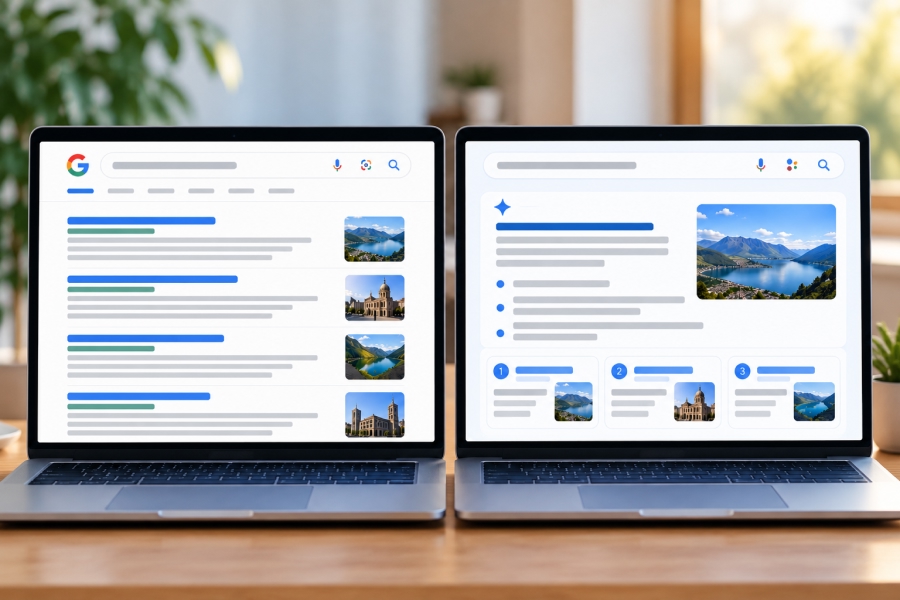
A zero-click search happens when Google answers the question directly on the results page, so the person searching never has to visit a website. This shows up in a few familiar forms:
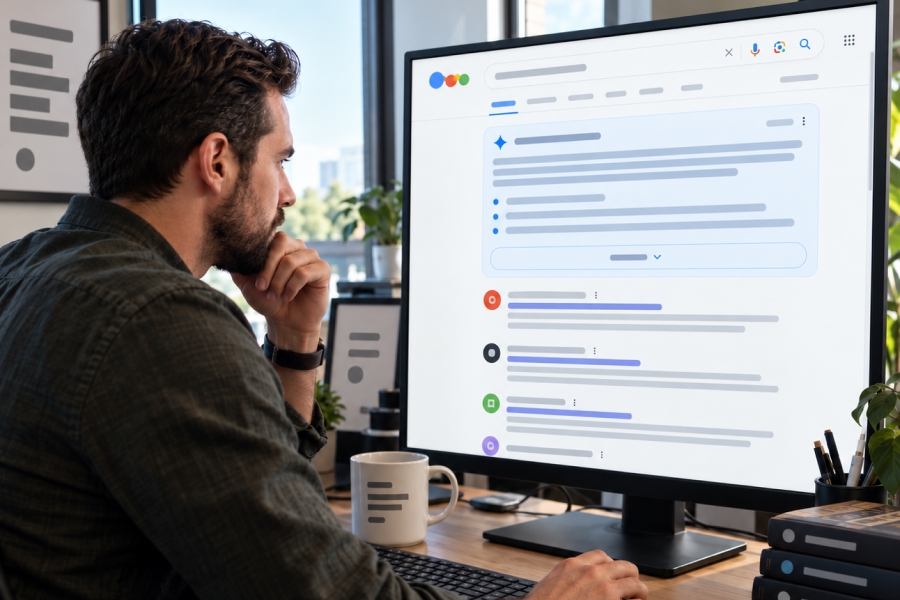
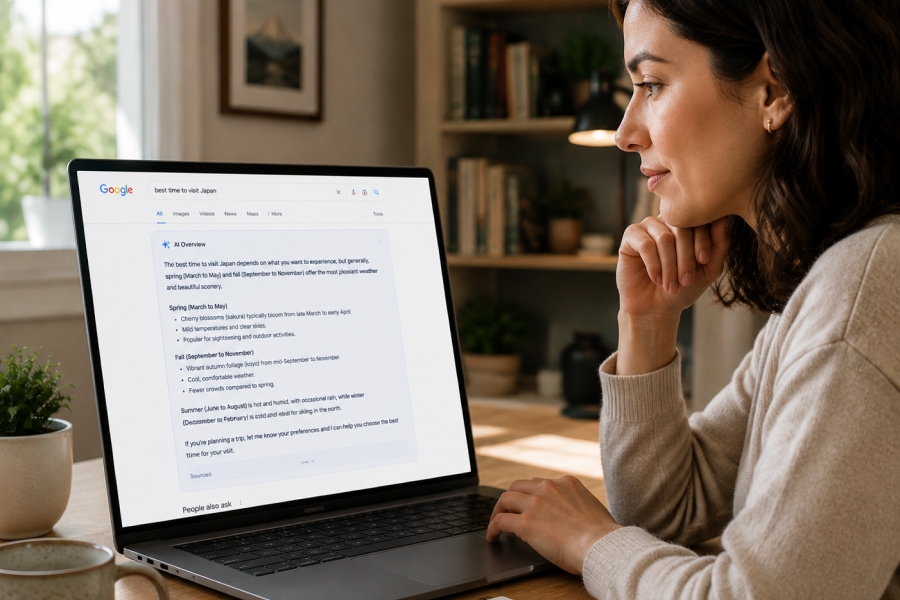
- AI Overviews, the AI-generated summary that now appears above traditional search results
- Featured snippets, knowledge panels, and “people also ask” boxes
- Local map packs that answer “near me” style searches without a click
- Quick answers for definitions, conversions, hours, and similar direct questions
According to a study covered by Search Engine Land, 68.01% of U.S. Google searches ended without a click during the first four months of 2026, up from 60.45% in 2024. Over that same period, the share of searches that led to another search on Google, rather than a click anywhere, rose as well. That is a meaningful shift in two years, and it is part of why so many small business owners are asking whether a website is still worth the investment.
AI Overviews are a major piece of that shift. The same research found they now appear on more than 20% of Google searches, and when one shows up, click-through rates to websites drop by nearly 60%. Google’s separate AI Mode experience played only a small role in the study period, but Google has reported it surpassed a billion monthly users with query volume more than doubling every quarter, so its share of the picture is likely to grow. It is also worth knowing this is not a brand-new trend: Google searches without a click have been rising for years, from roughly one in two in 2019 to about two in three today.
Why This Doesn’t Mean Your Website Is Obsolete
It is easy to read a statistic like that and assume websites are becoming unnecessary. The reality is more nuanced, and it actually reinforces why a well-built website still matters:
- AI Overviews and similar tools generate their answers by pulling from real websites. A page with clear, accurate, well-organized content is what gets pulled from, cited, and trusted, a page that does not exist cannot be a source for anything
- Zero-click behavior is not evenly spread across all searches. Local and transactional searches, things like “near me,” pricing, and “hire a,” still send meaningful clicks. It is broad, informational questions that AI tools absorb most often
- An impression inside an AI answer or a knowledge panel is still a form of visibility, even without a click. Many businesses find that brand recognition and direct or branded search traffic grow even as raw click-through traffic declines
Think of it this way: a plumbing company whose service-area pages clearly answer “do you offer emergency repairs” and “what does a water heater replacement cost” is in a very different position than a competitor whose site buries that information in a PDF or leaves it out entirely. The first business has a real chance of being the source an AI tool cites, and of showing up when someone finally does click through to compare options. The second has neither.
How to Tell If AI Tools Are Already Citing Your Site
Before changing strategy, it helps to know where things stand today. A few simple checks:
- Search a handful of questions your customers actually ask, and note whether an AI Overview appears and whether your business or a competitor is named or linked in it
- Check Google Search Console’s performance data for impressions on informational queries, even where clicks are flat or falling, rising impressions can signal AI visibility
- Ask ChatGPT, Google’s AI mode, or a similar tool a question in your industry and see which businesses, if any, get mentioned by name
None of this requires special tools. It typically takes twenty or thirty minutes and gives a realistic starting point for where a business stands before investing further.
What Small Business Owners Can Actually Do About It
Rethink what you measure
Raw traffic alone tells an incomplete story in 2026. Businesses often find it more useful to track a fuller picture:
- Calls, form submissions, and other direct leads, not just total visits
- Branded search growth: whether more people are searching for your business by name over time
- Conversion rate on the traffic you do get, rather than volume alone
Prioritize the searches that still click
Not every keyword is worth chasing equally right now. The same Search Engine Land research points to branded, local, and high-intent transactional searches as the categories that continue to hold up best, since people searching those terms are usually close to a decision and want a real page to compare, not just a summary:
- “Near me” and location-specific searches
- Pricing, cost, and “what to expect” style questions
- Comparison, review, and “how to choose a” content for people close to a decision
- Searches for your business by name, which tend to hold up regardless of broader zero-click trends
Structure content so it can be cited, not just visited
Pages that answer a question clearly near the top, with descriptive headings and an FAQ-style structure where it fits, tend to be the ones AI tools pull from. This also happens to be good practice for human readers skimming on a phone.
- Lead each key page with a direct, plain-language answer before getting into detail
- Use descriptive H2 and H3 headings that match how customers actually phrase questions
- Add a short FAQ section to service pages covering the questions customers ask most often
- Keep pricing, service-area, and policy information current, outdated answers are less likely to be cited
Keep your website as your home base
Social posts, directory listings, and email newsletters all point back to somewhere. A website is still that somewhere, the canonical place where a business’s information lives, gets crawled, and can be verified. Without it, there is nothing for search engines, AI tools, or a customer doing their own research to point back to.
Common Questions About Zero-Click Search
Does this mean SEO doesn’t matter anymore?
No. SEO still determines whether a page is trusted enough to rank, and AI tools draw heavily from pages that already rank well. What has changed is the payoff, ranking well no longer guarantees a click the way it once did, so visibility and citation matter alongside traffic.
Should a small business stop investing in its website?
Generally not. A website is still the source of truth AI tools, search engines, and customers rely on to verify a business. Businesses without a clear, accurate web presence have less chance of being cited or found at all.
How long does it take to see a difference?
It varies by industry, competition, and starting point. Structural and content changes typically take a few months to show up in search visibility, similar to traditional SEO timelines.
What This Means for Your Website Strategy Going Forward
The goal is shifting from chasing every click to building a site that earns trust, gets cited accurately, and still captures the local and transactional searches that convert. A well-structured website with a solid SEO foundation can do both. If it has been a while since your site and SEO strategy were reviewed against how search actually works today, that review is worth having.
Moore Tech Solutions can take a look at how your website and search visibility are holding up in the current environment. Get in touch to start the conversation.
This article is for informational purposes only and is not a guarantee of results. Results from web design, SEO, and digital marketing services vary based on market conditions, industry, competition, and implementation. Contact a qualified digital marketing professional for guidance specific to your business situation.
Donald B. Moore
Donald B. Moore is the founder of Moore Tech Solutions, Inc., where he has spent over two decades helping businesses grow online. With deep expertise in web solutions, Don combines technical precision with a marketer’s eye for results. He has helped clients nationwide, delivering results that are strategically optimized for visibility and conversion. Through his posts, Don shares practical insights drawn from years of hands-on problem-solving, empowering readers to make informed, impactful decisions about their online presence.